Inside Les Exclusifs: The Day Chanel's Fragrance Expert Told Me the Story of Boy
A certified Chanel fragrance expert walked me through Les Exclusifs — a century of Chanel, the love story behind Boy, and why there's no oud.
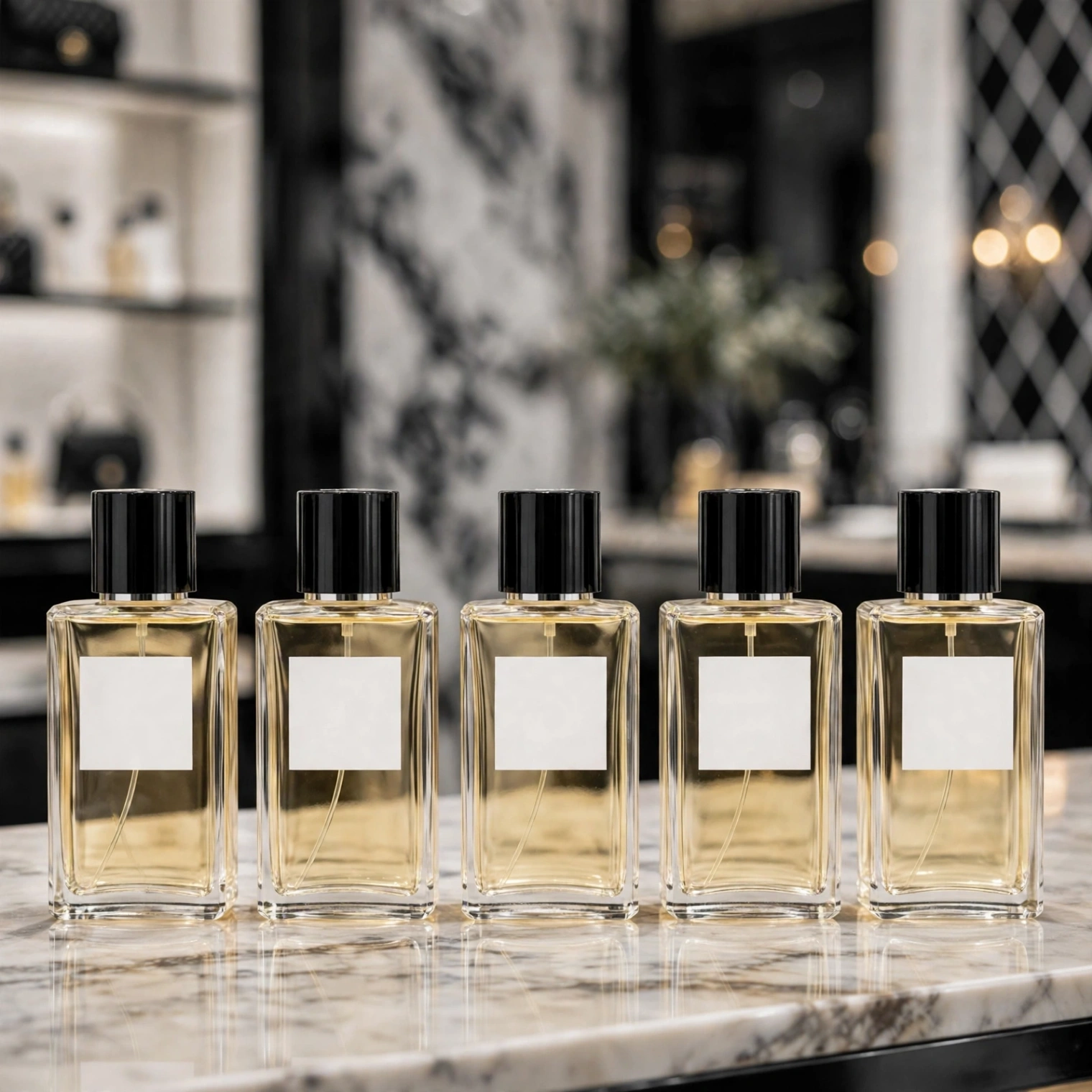
I went into the Chanel boutique to smell Les Exclusifs and walked out with a masterclass. The representative who helped me wasn't just staffing a counter — he's a Chanel fragrance specialist, trained and certified through Chanel's own academy, and honestly one of the most personable people I've talked to in a store all year. Kind, funny, zero pressure. And the man knew his stuff. What follows is Les Exclusifs as he told it to me — because the way he tells it, this line isn't a collection of perfumes. It's a biography.
It starts with a number
He started where Chanel starts: 1921, N°5. Perfumer Ernest Beaux handed Gabrielle Chanel a row of numbered samples and she picked the fifth, a number she already considered lucky. What made it revolutionary wasn't a flower. The perfumes of the day were soliflores, single flowers in a bottle, and she wanted the opposite: a perfume that smelled, in her words, like a woman, not like a rose. Beaux built it from dozens of ingredients with a then-radical dose of aldehydes, and it didn't smell like anything in nature. It smelled composed. Abstract. That idea — a scent as a style, not a flower — is still the house's spine more than a hundred years later.
He also told me Chanel has had only four in-house perfumers in over a century: Beaux, then Henri Robert, then Jacques Polge for nearly four decades, and since 2015 Jacques' son, Olivier Polge. Nobody outside the house creates a Chanel, and the formulas never leave Chanel's own laboratory. When I asked about the flowers, he lit up: since 1987 the house has bought its Grasse harvest from one family, the Muls of Pégomas, who grow five crops exclusively for Chanel — May rose, jasmine, tuberose, geranium, and iris. A 30ml bottle of N°5 parfum, he told me, holds the essence of roughly a thousand jasmine flowers and a dozen May roses, from a bloom that lasts about three weeks each spring.
The line itself
Les Exclusifs launched in 2007 under Jacques Polge — ten fragrances at first, sold only in Chanel boutiques, each one a portrait of something in Gabrielle's life: an address (31 Rue Cambon, her atelier; 28 La Pausa, her Riviera villa), her lacquered Coromandel screens, her symbols. Four of the originals were resurrections — N°22, Gardénia, Bois des Îles, and Cuir de Russie, all from Beaux's 1920s work. The line has grown to nineteen, and every one wears the same bottle: a clear glass monolith, a plain white label, a black magnetic cap stamped with the double C. The stories change. The bottle never does.
The story of Boy
Then he picked up Boy, and his whole tone changed. "This one," he said, "is the love of her life."
Arthur "Boy" Capel was an English polo player and shipping tycoon Gabrielle met in 1908, in the orbit of her then-lover Étienne Balsan. By 1909, Capel was the love. He believed in her before anyone did — he set her up in a Paris apartment and put up the money for her first shops: the millinery boutique at 21 Rue Cambon in 1910, then Deauville in 1913 and Biarritz in 1915. She paid him back in full, every franc, out of the boutiques' profits. But the money, the rep told me, wasn't even the biggest gift. Capel's own wardrobe was. Gabrielle started borrowing his blazers, his polo clothes, his tailoring — and that squared, masculine ease became her revolution: jersey, tweed, short hair, women freed from corsets. Chanel says it herself, in the house's own telling: inspired by his gentleman's style, she imagined a whole new silhouette for women.
He was never only hers. In 1918 Capel married an English aristocrat, Lady Diana Wyndham — and still never left Gabrielle's life. And then, on December 22, 1919, driving through the south of France on his way to spend Christmas with her, Boy Capel was killed in a c
ar accident. He was 38. He was buried with full military honours at Fréjus Cathedral on Christmas Eve, and on the roadside where he died, a memorial cross still bears his name — said to have been placed there by Gabrielle herself.
Twenty-five years later, she told the writer Paul Morand what it cost her: "His death was a terrible blow to me. In losing Capel, I lost everything." Her biographers note that her mourning is where the house's famous black comes from — grief turned into a design language. She never married.
Boy, the fragrance
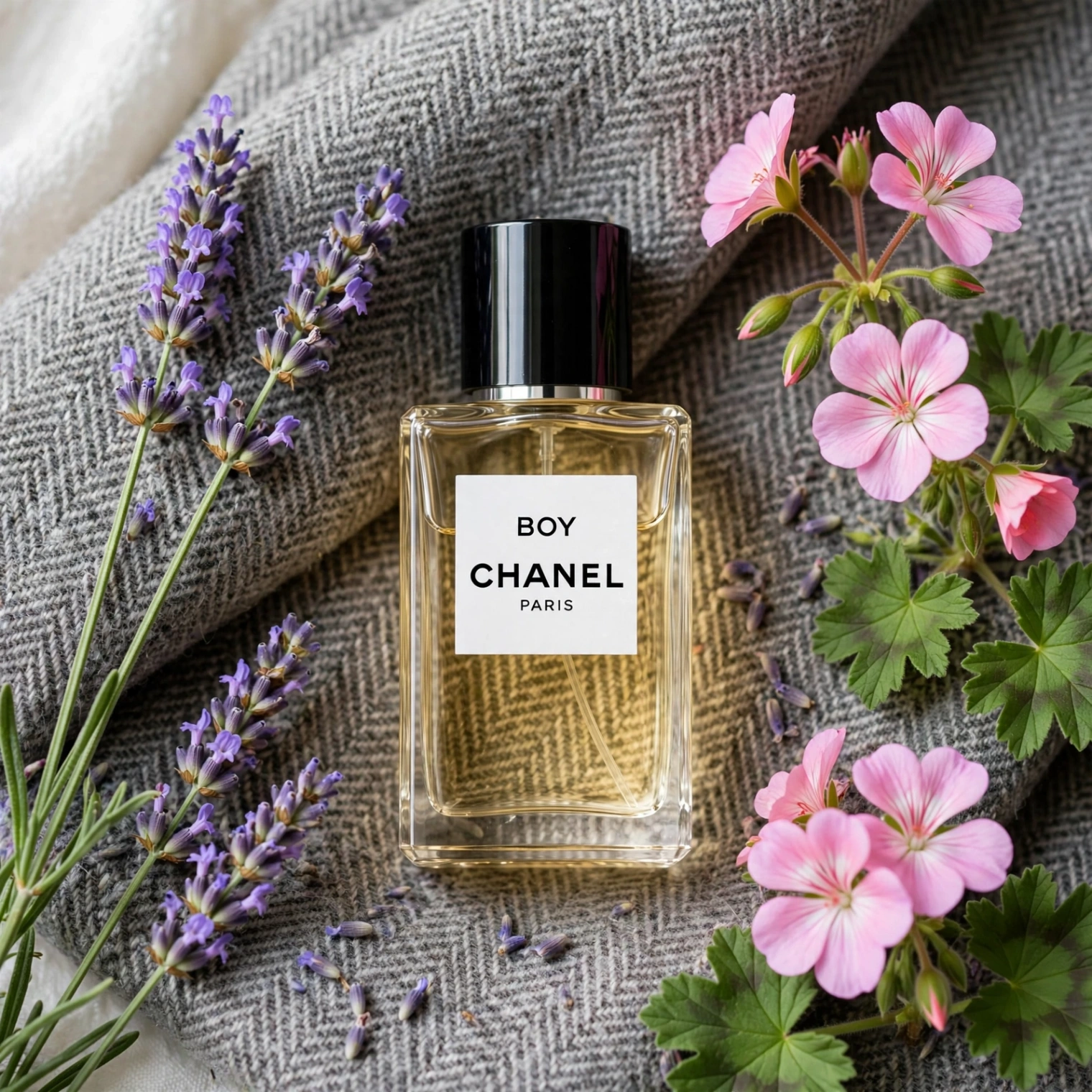
Ninety-seven years after his death, in 2016, Olivier Polge finally gave Capel his portrait. Boy Chanel is a fougère, the classic barbershop family built on lavender — which is exactly the point. It's an English gentleman's scent: lavender and rose geranium warmed with woods. Polge has said he wasn't trying to design a unisex fragrance; he made a man's fragrance and let it be worn by a woman, the same way Gabrielle wore Capel's shirts and made them hers. Gender, he said, is given by the person wearing it. Chanel's own description calls it liberated elegance, and knowing the story, that's exactly how it wears — clean, tailored, a little wistful underneath. It comes in 75ml at $355 and a 200ml at $595.
My top three
Beige — 5/5. This is the one I fell in love with. A honeyed floral that wears like the color itself: warm, soft, expensive without trying. If the whole visit had been just this bottle, it would have been worth it.
Bel Respiro — 4.5/5. The green one. Crisp and spring-like, named for the house outside Paris where Gabrielle spent her weekends — it smells like a garden right after everything's been cut.
Jersey — 4.3/5. Lavender and vanilla done the Chanel way: soft, clean, and comforting, named for the fabric Gabrielle borrowed from men's underwear and made into fashi
on history.
The question I had to ask — where's the oud?
Somewhere along the wall it hit me: nineteen fragrances, and not one oud. So I asked. His answer was basically the house philosophy in one breath: Chanel is a floral house. The spine of the line is flowers — jasmine and rose from Grasse, iris running through La Pausa, 1932, Misia, and Comète. And my favorite piece of trivia from the whole visit: Gabrielle's favorite flower was the camellia, which has no scent you can extract — so Gardénia is a perfumer's recreation of a flower that can't be bottled. That's Chanel in a nutshell. Not the literal ingredient. The idea of it.
Polge has been asked about the oud boom directly, and his answer was that there are "ouds galore" out there and he tries not to be opportunistic about it — the question he asks of a scent is whether it's in the spirit of Chanel. A century in, the house would rather miss a trend than break character. Standing at that counter, smelling how coherent the whole wall is, I got it.
What I walked away with
I went in to smell some expensive perfume and left thinking about a woman who lost the love of her life at 36 and turned all of it — his clothes, her grief, her lucky numbers, her addresses — into a language the house still speaks fluently a hundred years later. That's what Les Exclusifs is: nineteen chapters of one life, in identical bottles. If you go, find the specialist, and ask him about Boy. Trust me. Ask him about Boy.